
Vassiliki Chryssanthopoulou
Associate Professor, Social Anthropologist, Folklore Studies, Department of Philology, National and Kapodistrian University of Athens, Greece
Renos K Papadopoulos, PhD., FBPsS, is Professor and Founder Director of the Centre for Trauma, Asylum and Refugees and of the MA /PhD Programmes in Refugee Care at the University of Essex, a member of the ‘Human Rights Centre’, of the ‘Transitional Justice Network’ and of the ‘Armed Conflict and Crisis Hub’ all at the University of Essex, as well as Honorary Clinical Psychologist at the Tavistock Clinic. He is a practitioner, trainer and supervisor Clinical Psychologist, Jungian Psychoanalyst and Systemic Family Psychotherapist. As a consultant to the United Nations and other organisations, he has been working with refugees, tortured persons, trafficked people and other survivors of political violence and disasters in many countries. He lectures and offers specialist trainings internationally, and his writings have appeared in 18 languages. Among the honorary acclaims that he has received are Lifetime Achievement awards by the European Family Therapy Association and by the International Association of Jungian Studies; by the University of Essex for the ‘Best International Research Impact’, and by two Mexican Foundations for ‘exceptional work with vulnerable children and families in Mexico’. His last two books are on Moral Injury, and Involuntary Dislocation; the latter has been hailed as inaugurating a new paradigm in the field.
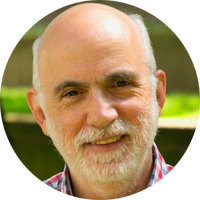
Renos K Papadopoulos
Professor and Founder Director of the Centre for Trauma, Asylum and Refugees and of the MA /PhD Programmes in Refugee Care, University of Essex, UK
Proposed title:
‘Trauma’ work today. Curating and commodifying human suffering. Transformative possibilities through epistemological agility.
Abstract:
The ‘trauma’ industry is one of the most increasingly thriving enterprises in the world over the last few decades. The predominant approach of conceptualising human suffering in the context of ‘trauma’ is on mastering specific techniques that are aimed at alleviating specific symptoms and other forms of discomfort and anguish. This presentation will explore the importance of appreciating the role of imperceptibly constructing epistemological presuppositions that position us in ways that we adopt certain perspectives in perceiving relevant events and experiences. What is the role of ‘curating’ societal discourses that construct commodifying human suffering? How do we inadvertently develop a ‘victim identity’ in those we want to help? What other identities are constructed from such ‘curating’ of societal discourses? Is there an epistemological framework that can overcome such distortions?
Dr Kenneth Skeldon began his academic career as a research fellow at the University of Glasgow working in the fields of gravitational wave astronomy, optical instrumentation, and medical physics. Following a UK NESTA Fellowship in 2005, Ken moved into public engagement, and for 8 years he led the University of Aberdeen’s public engagement, festivals, and events strategy during which time his team oversaw a significant culture change towards public engagement with research. Ken is also an award-winning science communicator and has worked in the science centre and museum sector. From 2015 - 2017 he was Chair of the Board of Directors at Aberdeen Science Centre where he helped secure a substantial capital redevelopment award. In 2017 Ken moved to Cambridge UK to lead Public Engagement at the Wellcome Genome Campus where his team managed community engagement, education and public programmes themed around genomics and bioinformatics. Ken took up his current position at the University of Glasgow in September 2021 where among other things, he leads the Glasgow Open Lab - an initiative of the CIVIS European University Alliance and a role that thrives on Ken's enthusiasm for European collaboration and cross-sectoral sharing. In May 2024 he was elected as the new President of the European Science Engagement Association and continues to be active across many trans-national engagement projects.

Kenneth Skeldon
Dr Kenneth Skeldon, CIVIS Open Lab Coordinator at University of Glasgow, Scotland,
President of the European Science Engagement Association
Research for All: The Role of Public Engagement in Changing Times
Public engagement with research has a prominent role to play in today’s research landscape, which is hallmarked by complex, interconnected, and deeply embedded challenges relevant to our everyday lives.
Over the past few decades, interactions between research communities and publics have changed, becoming more attuned to building trusted relationships, addressing real-world concerns, and involving people more deeply in the research journeys that ultimately affect them. Added to this, the rise of misinformation and misgivings around academic expertise, makes it more important than ever to foster inclusive and democratic forms of knowledge creation.
For qualitative inquiry–based research this is very relevant, with participatory and engaged approaches foregrounding the very purpose of research and encouraging the inclusion of people’s lived experiences, the voices of underrepresented communities, and in spotlighting different social and cultural contexts.
However, important questions remain - such as how to further break down the barriers between academia and society and how we address practical impedances to help individual researchers or teams build and sustain community-research partnerships.
This presentation will explore these issues, while sharing some experiences from the European Science Engagement Association, which turns 25 years old in 2026 and represents a diverse family of Universities, NGOs, cultural bodies and other actors sharing a common interest to advance public engagement within the research and innovation ecosystem. Some current resources and initiatives will also be highlighted for those interested to develop networks or ideas further.